
LECMOS
Tracking the "Connected Flow of Value" across GoforusNet's 6 industries. We deliver the newest market trends and high-impact innovations in Tech, Finance, Education, Transport, Media, and Charity. Join the evolution of GCM.
Identity
LECMOS's Creations
Back to Profile
@Lecmos • 3 months ago • African
Revenue Overview
Today's Revenue
0.0000 GUV
Lifetime Revenue
0.0000 GUV
Lifetime Breakdown
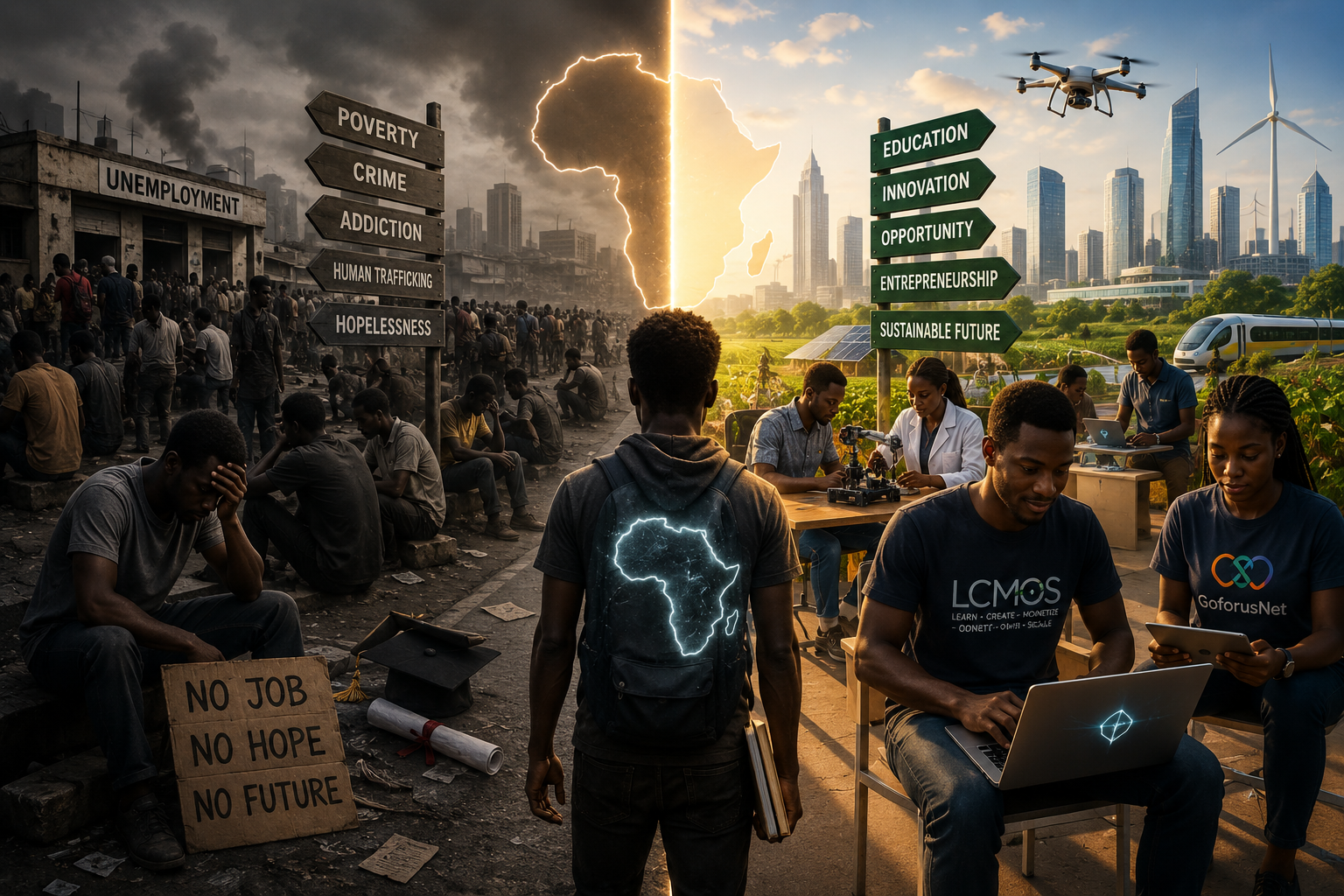
Across Uganda and much of Africa, millions of young people spend years in school believing education will eventually lead them into meaningful economic participation. Families sell land, spend savings, take loans, and sacrifice everything just to keep children in classrooms. Students dedicate years to research, projects, internships, and examinations with hope for a better future.
But after graduation, many discover a painful reality:
The system prepared them to pass exams…
but not to enter functioning economic structures.
An agriculture graduate becomes a boda rider.
An engineer starts selling clothes downtown.
A software student remains unemployed without a laptop.
A healthcare innovator cannot build a prototype because there is no funding.
Brilliant final-year projects receive high marks, get approved academically, then die silently on university shelves.
This is where Africa is losing one of its greatest resources:
Untapped human potential.
And when millions of young people carry knowledge without opportunity, ambition without direction, and energy without structure, pressure begins spreading throughout society.
Not only through unemployment.
But through:
Crime.
Addiction.
Depression.
Human trafficking.
Online scams.
Hopelessness.
Social instability.
Many young people are not naturally criminals.
Many are simply trapped between survival and disappointment.
A generation that sacrificed years into education but sees no path forward eventually begins questioning its own worth. Some become vulnerable to dangerous networks promising opportunities abroad. Others enter theft, drug networks, or risky survival behaviors because economic pressure eventually overrides patience.
At the same time, many African economies are still physically locked into a “move to survive” structure.
People move constantly searching for opportunity.
Cities become overcrowded.
Traffic grows endlessly.
Stress increases daily.
Nervous systems remain overloaded.
Society then treats symptoms instead of solving causes:
More policing.
More restrictions.
More prisons.
But the true solution is not punishment alone.
The real solution is building systems that absorb human potential before frustration turns into destruction.
Africa must rethink development.
The future will not belong only to countries building roads and classrooms.
It will belong to countries building systems that convert education into economic participation.
Universities should not only graduate students.
They should become innovation launch systems.
Educational funding should not stop at teaching. Part of it should support graduate innovation, startup incubation, prototype development, AI integration, and digital infrastructure that allows ideas to survive after school.
Because the truth is:
Africa is not poor in intelligence.
Africa is poor in systems that connect intelligence to opportunity.
This is why ecosystems like GoforusNet, GCM, and the LCMOS structure matter.
Not merely as social platforms.
But as future economic systems where:
Learning connects to creation.
Creation connects to monetization.
Monetization connects to ownership.
Ownership connects to scalable growth.
Learn → Create → Monetize → Own → Scale
Imagine a future where:
• Student projects are visible to global investors
• Communities crowdfund local innovations
• Young creators monetize skills immediately
• AI helps graduates launch businesses faster
• Remote ecosystems reduce unnecessary movement
• Digital ownership protects youth innovation
• Knowledge becomes economically active instead of theoretical
That is how future societies reduce unemployment pressure.
Not by waiting for limited traditional jobs.
But by building connected systems where millions can participate economically from wherever they are.
The greatest danger for Africa is not population growth.
It is allowing millions of educated young people to feel invisible inside systems they sacrificed everything to enter.
Because ignored potential eventually becomes instability.
But activated potential becomes civilization.
And the nations that understand this early will shape the future of humanity.
Are you sure?
Do you really want to delete this post? This action cannot be undone, and any revenue associated with it will be permanently lost.
@Lecmos • 3 months ago • African
Revenue Overview
Today's Revenue
0.0000 GUV
Lifetime Revenue
0.0000 GUV
Lifetime Breakdown
I continue to observe one of the deepest structural realities affecting not only Uganda, but much of Africa today:
For millions of people, survival is still physically tied to movement.
In many African economies, income is still heavily dependent on being physically present somewhere every single day. To earn, people must move. To trade, they must travel. To survive, they must stay in constant motion.
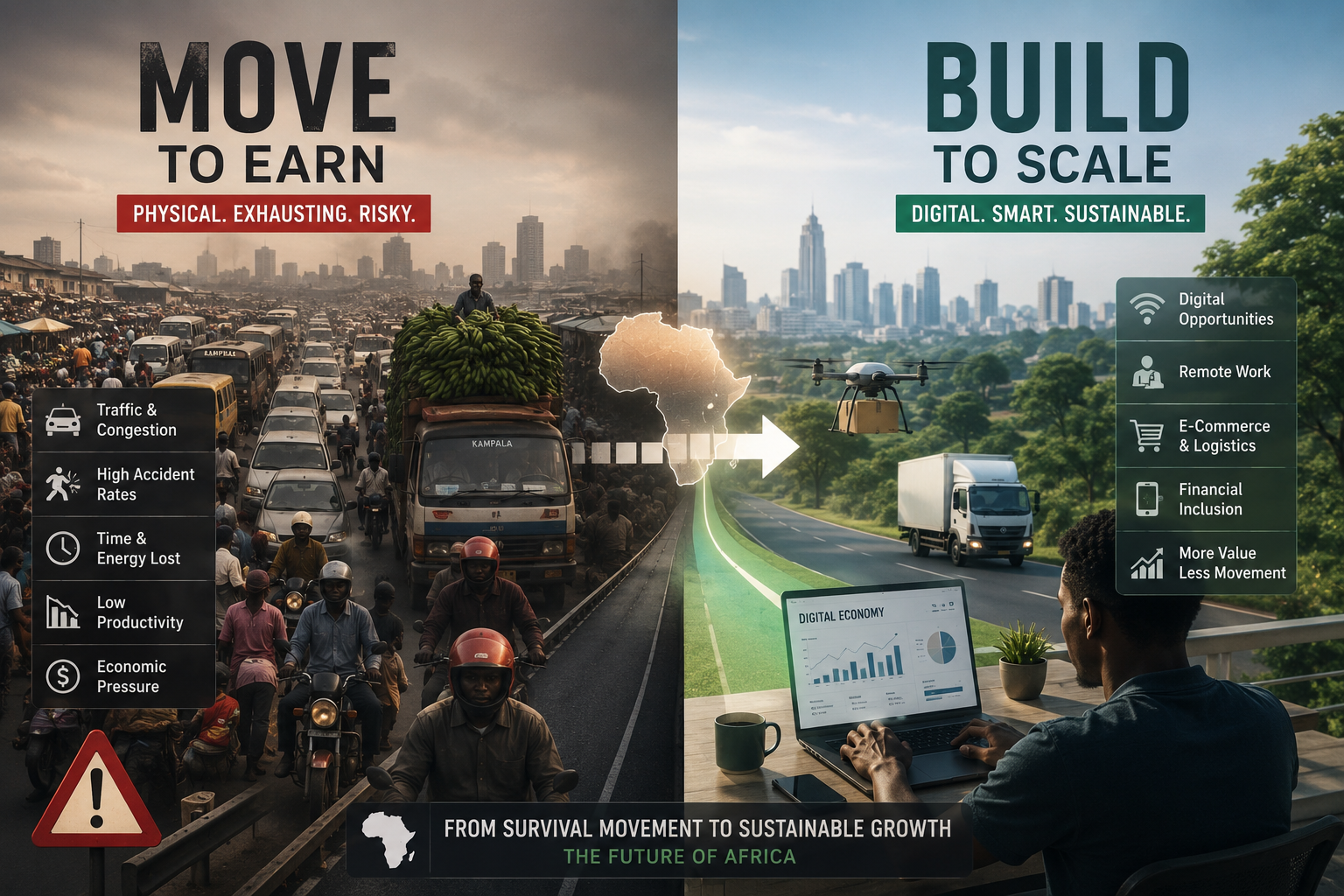
This has quietly created what I call a “Move to Earn” economic structure — a system where mobility itself becomes the foundation of survival.
Every morning, millions wake up before sunrise to enter roads already overwhelmed by pressure: bodabodas rushing for passengers, taxis packed beyond capacity, vendors carrying goods, trucks transporting agricultural products, workers commuting long distances, students traveling for education, and entrepreneurs moving from place to place searching for opportunity.
Behind the traffic congestion is not simply poor road planning.
Behind it is an economic system still dependent on physical presence.
And until Africa transforms this structure, congestion, exhaustion, pollution, accidents, and economic inefficiency will continue rising together.
⚙️ The Real Problem Is Not Movement — It Is Dependency on Movement
Movement itself is not bad.
Trade requires mobility. Communities require connection. Transport powers economies.
But the problem begins when movement becomes the only way value can be created.
In many developed digital economies, value can now move without the human body moving constantly.
Knowledge moves digitally. Money moves digitally. Meetings happen remotely. Products are automated through logistics systems. Education is accessed online. Services scale through platforms.
But in much of Africa, value still depends heavily on physical human movement.
This means:
If someone does not travel, they often do not earn.
If they stop moving, income stops too.
That creates enormous pressure on roads, cities, transport systems, and human lives.
🌍 The Informal Economy and Physical Survival
A major reason behind this reality is the dominance of Africa’s informal sector.
Across Uganda, Kenya, Tanzania, Rwanda, Nigeria, Ghana, and many other African countries, huge percentages of the population operate in informal businesses: street vending, small retail, manual labor, market trading, transport services, mobile sales, casual work, and physical distribution.
These systems depend on direct human interaction.
A market vendor must physically stand in a market all day. A rider earns only after completing another trip. A trader must travel to restock goods. A casual laborer must physically search for work every morning.
This creates economies where human energy is constantly exchanged for survival in real time.
The result is exhaustion without scalability.
🚛 Agriculture and the Pressure of Physical Logistics
Africa’s agricultural strength also contributes to this movement-heavy economy.
Fresh produce like matooke, tomatoes, coffee, onions, milk, fruits, and vegetables must move quickly from farms to urban centers before spoilage occurs.
Because cold-chain infrastructure, food storage systems, and advanced logistics networks are still developing, farmers and suppliers often rush products directly to markets immediately after harvest.
This creates constant transport pressure:
trucks overloaded with produce, night travel, unsafe driving, high fuel costs, and inefficient delivery chains.
A large percentage of road activity across Africa is not luxury movement.
It is survival logistics.
📱 The Digital Gap Slowing Economic Transformation
I also recognize another important challenge:
Africa is growing digitally, but not yet equally.
Mobile Money transformed financial access across the continent, proving Africa’s ability to innovate beyond traditional banking systems.
But despite this progress, many barriers still remain:
limited digital literacy, expensive internet, high smartphone costs, unreliable electricity, limited remote work opportunities, and distrust in fully digital transactions.
Many consumers still prefer physical verification before payment because trust systems are still developing.
As a result, digital economies are growing — but physical economies still dominate everyday survival.
🛣️ How This Creates Traffic and Deadly Roads
When income depends on movement, speed becomes tied to survival.
A bodaboda rider may risk dangerous overtaking to complete more trips. Taxi operators overload passengers to maximize profit. Truck drivers overwork without enough rest. Delivery riders rush against time pressure. Workers commute long distances daily because opportunities remain centralized in cities.
This creates roads filled not only with vehicles — but with economic pressure.
Many accidents are not simply transport failures.
They are symptoms of economic systems under strain.
🔁 Africa’s Next Transformation Is Not Just Digital — It Is Structural
The future of Africa will not be transformed by technology alone.
It will be transformed by systems that reduce unnecessary movement while increasing value creation.
The real breakthrough comes when Africans can:
Learn remotely, build digitally, trade efficiently, access markets online, monetize skills globally, and create scalable value without constant physical exhaustion.
This is where new ecosystems become important.
The future belongs to systems where:
Knowledge becomes infrastructure. Digital identity becomes opportunity. Technology reduces friction. Platforms connect value directly. And every action compounds into growth.
🚀 Why This Matters for the Next Generation
Africa has one of the youngest populations on Earth.
If this generation remains trapped in systems where survival depends only on physical movement, the pressure on cities, transport systems, unemployment, and infrastructure will continue intensifying.
But if digital ecosystems, smart logistics, financial technology, AI systems, creator economies, and scalable online opportunities expand correctly, Africa can shift from:
“move to survive” toward “build to scale.”
That transition changes everything.
💡 Final Thought
The future is not about stopping movement.
It is about reducing unnecessary struggle.
Because true development happens when people no longer spend most of their lives chasing survival physically every single day.
The strongest economies are not built only on roads full of movement.
They are built on systems where value flows intelligently.
And Africa’s greatest opportunity may not simply be building bigger roads —
but building smarter systems.
Are you sure?
Do you really want to delete this post? This action cannot be undone, and any revenue associated with it will be permanently lost.
@Lecmos • 3 months ago • African
Revenue Overview
Today's Revenue
0.0000 GUV
Lifetime Revenue
0.0000 GUV
Lifetime Breakdown
Scrolling.
Posting.
Reacting.
Watching.
But after all that time, very little changes in their real lives.
Why?
Because the modern internet was designed to capture attention — not build value.
Every day, billions of moments are created online. Ideas are shared. Skills are displayed. Conversations happen. Creativity flows endlessly across screens. Yet most of it disappears into systems that reward visibility more than transformation.
People are active… but not advancing.
This is where the future begins to change.
The next generation of digital platforms will not simply ask:
“How long can we keep users online?”
They will ask:
“How much value can users create while they are online?”
That difference changes everything.
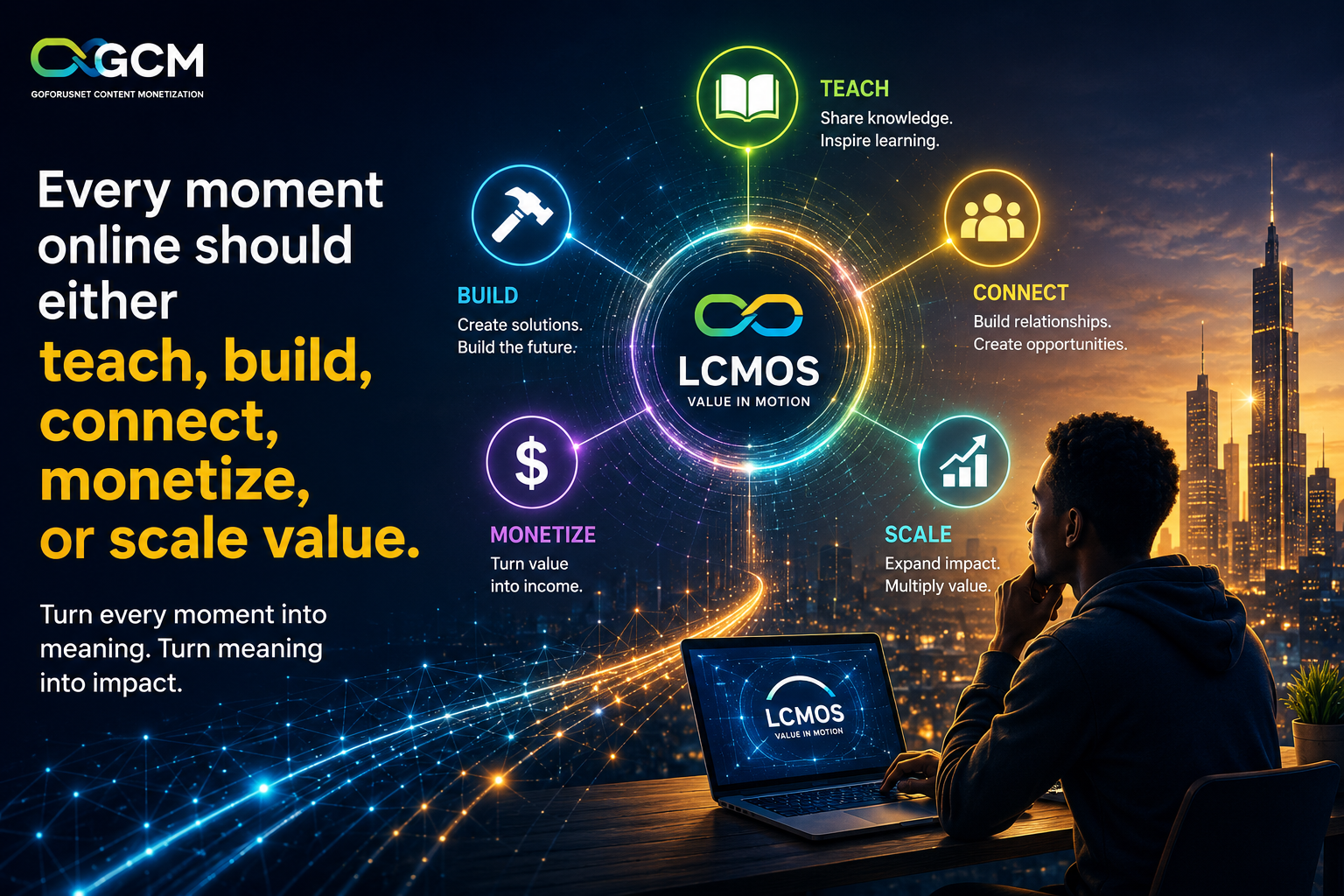
Because every moment online should either teach, build, connect, monetize, or scale value.
A single insight should lead to learning.
A single skill should lead to opportunity.
A single connection should lead to collaboration.
A single creation should lead to ownership.
A single moment should have the power to grow into something larger than itself.
This is the shift from passive consumption to active value creation.
For too long, people have been giving platforms their energy, creativity, and time without building anything lasting for themselves. Attention became the product. Presence became temporary. Effort became disposable.
But the future belongs to systems where digital activity becomes economic activity.
Where knowledge becomes an asset.
Where creativity becomes infrastructure.
Where engagement becomes opportunity.
Where online identity becomes real-world value.
This is bigger than social media.
It is the evolution of how humans interact with technology.
The world is entering an era where intelligence, systems, and digital ownership matter more than ever before. In this new environment, the people who grow the fastest will not simply be the loudest online — they will be the ones connected to systems that continuously convert activity into value.
That is why the future is no longer about simply being online.
It is about building while online.
Learning while online.
Scaling while online.
And creating systems where every interaction moves life forward instead of wasting human potential.
The internet is no longer just a place to consume.
It is becoming a place to build.
And those who understand this shift early will not just participate in the future.
They will help shape it.
Are you sure?
Do you really want to delete this post? This action cannot be undone, and any revenue associated with it will be permanently lost.
@Lecmos • 3 months ago • African
Revenue Overview
Today's Revenue
0.0000 GUV
Lifetime Revenue
0.0000 GUV
Lifetime Breakdown
Most people believe success comes from doing big things.
Big investments.
Big moves.
Big risks.
But in reality…
Power doesn’t come from size.
It comes from alignment.
⚙️ The Hidden Truth
A person who doesn’t understand the system:
❌ Works harder
❌ Repeats effort
❌ Starts over again and again
While a person who understands the system:
✔ Acts with clarity
✔ Uses structure
✔ Builds on every step
The difference is not effort.
The difference is how the effort flows.
🔁 Why Small Actions Become Powerful
Inside a system, nothing is wasted.
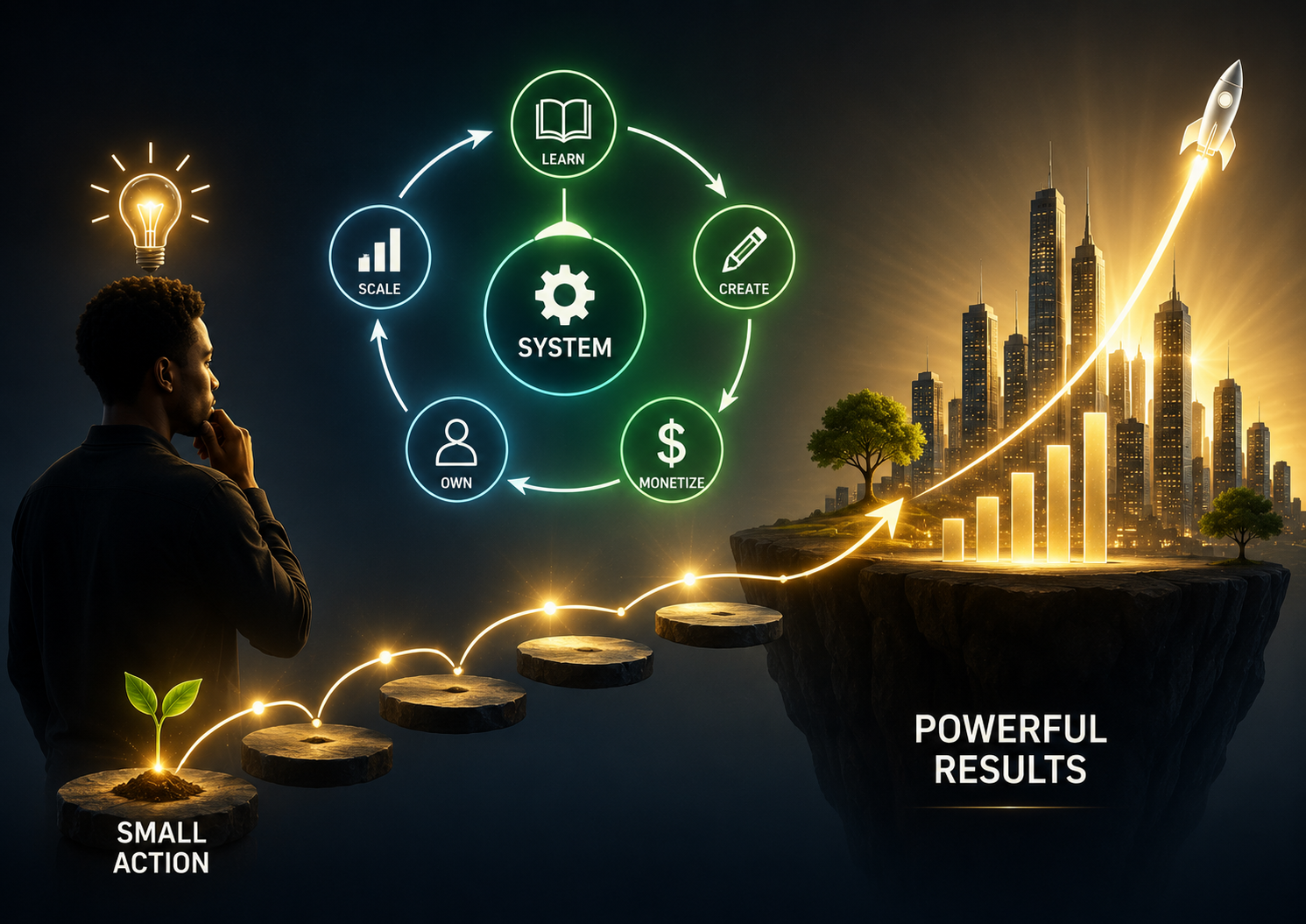
Every action connects to the next:
Learn → Create → Monetize → Own → Scale
So even something small:
• One idea
• One post
• One skill
• One connection
…does not end there.
It continues.
It multiplies.
It compounds.
💡 Think of It Like This
If you pour water on the ground, it disappears.
But if you pour water into a pipeline…
It flows.
It reaches destinations.
It creates impact.
👉 The system is that pipeline.
🌐 The Power of Understanding
When you understand the system:
You stop guessing
You stop wasting effort
You start positioning your actions
You begin to see:
✔ Where to start
✔ What to do next
✔ How things connect
✔ How value grows
🚀 From Effort to Impact
Without understanding:
Effort = Exhaustion
With understanding:
Effort = Expansion
Because now:
👉 Every step builds on the previous one
👉 Every action increases in value
👉 Every result opens the next level
🔓 What This Means For You
You don’t need to wait for a “big opportunity”
You don’t need perfect conditions
You don’t need massive resources
What you need is:
✔ The right system
✔ The right flow
✔ The right understanding
Because once you have that…
Even the smallest move becomes strategic.
💡 Final Thought
Success is not about doing more.
It is about doing things within a system that multiplies them.
Because when you understand the system:
Even small actions…
👉 Create momentum
👉 Generate value
👉 Build something bigger than you imagined
🔥 Call to Action
Don’t underestimate small beginnings.
Enter the system.
Understand the flow.
And let every action work for you.
Are you sure?
Do you really want to delete this post? This action cannot be undone, and any revenue associated with it will be permanently lost.
@Lecmos • 3 months ago • African
Revenue Overview
Today's Revenue
0.0000 GUV
Lifetime Revenue
0.0000 GUV
Lifetime Breakdown
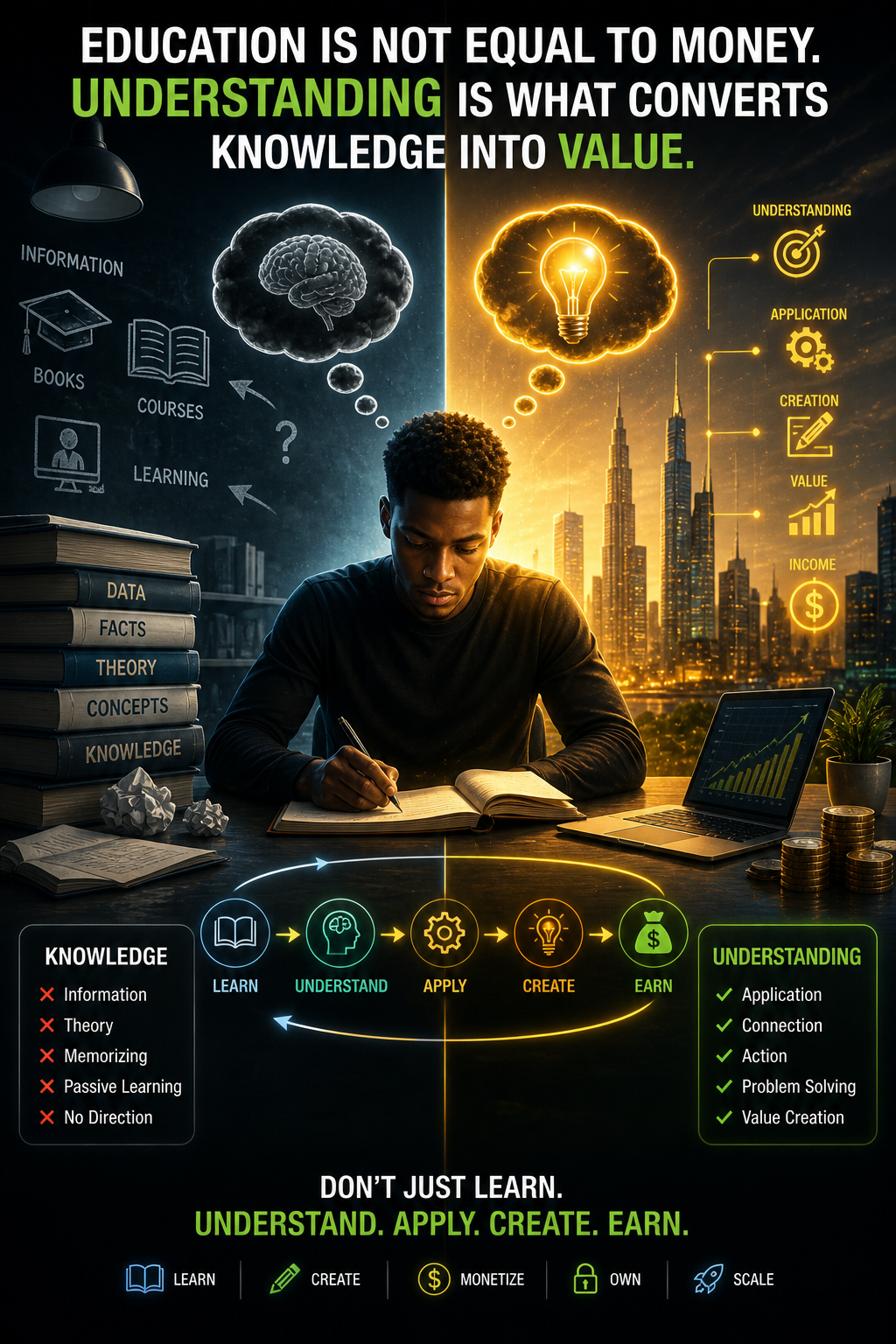
Most people today are learning.
But not everyone is earning.
And that’s where the real difference is.
📌 The Missing Link
Education gives you information.
But information alone does not change your life.
You can read books…
Watch videos…
Attend classes…
Yet still remain in the same place.
Why?
Because knowledge without understanding has no direction.
⚙️ What Understanding Really Means
Understanding is the ability to:
✔ Apply what you learn
✔ Connect ideas to real life
✔ Turn information into action
✔ Create something valuable from knowledge
It is not about how much you know.
It is about what you can do with what you know.
🔁 From Knowledge to Value
This is where transformation happens:
Learn → Understand → Apply → Create → Earn
When you understand something deeply:
👉 You stop consuming only
👉 You start creating
👉 You begin solving real problems
👉 You generate real income
💡 Why Most People Stay Stuck
Many people collect knowledge…
But never convert it.
They stay in learning mode forever
Without entering value creation
And in today’s economy:
👉 Value is what gets paid
👉 Not information
🌐 The New Way Forward
In a connected system like GCM:
Knowledge is not the end
It is the beginning
You are expected to:
✔ Learn with purpose
✔ Create from understanding
✔ Monetize your output
✔ Own your results
✔ Scale your impact
🚀 Final Thought
Education opens the door.
But understanding is what allows you to walk through it —
and build something on the other side.
🔥 Call to Action
Don’t just learn.
Understand. Apply. Create. Earn.
Because that is how knowledge becomes value.
Are you sure?
Do you really want to delete this post? This action cannot be undone, and any revenue associated with it will be permanently lost.
@Lecmos • 3 months ago • African
Revenue Overview
Today's Revenue
0.0000 GUV
Lifetime Revenue
0.0000 GUV
Lifetime Breakdown
The world is not just changing…
It is reorganizing itself around systems of value flow.
And at the center of this shift is one powerful model:
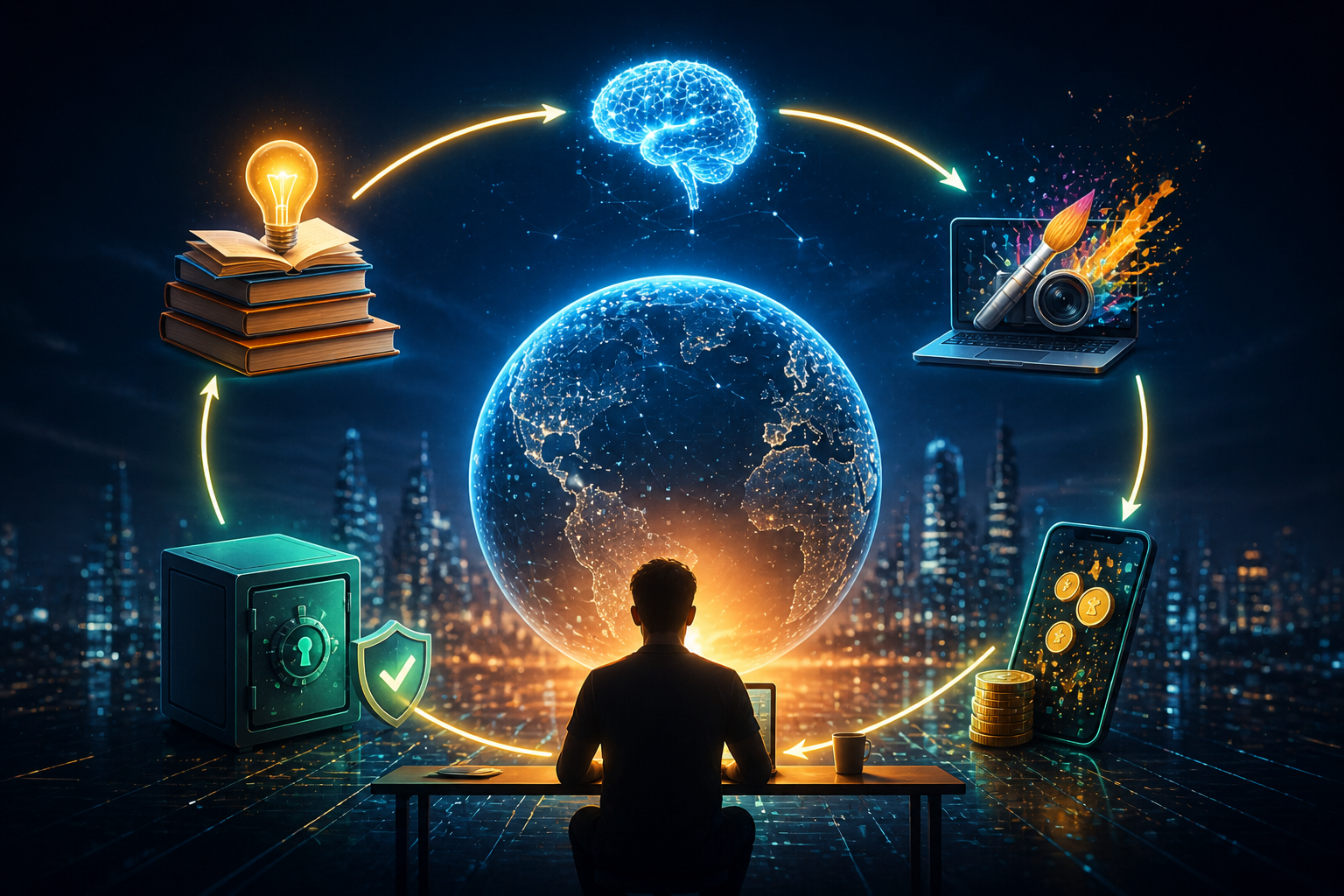
LCMOS — Learn → Create → Monetize → Own → Scale
This is no longer theory.
It is becoming the operating system of the modern economy.
⚙️ What Makes LCMOS an Innovation?
Before now, everything was fragmented:
You learned… but didn’t earn
You created… but didn’t monetize
You worked… but didn’t own
Now, LCMOS connects everything into one continuous cycle.
👉 It turns effort into structured value flow
🌐 Where GCM Comes In
GCM (GoforusNet Content Monetization) is not just a platform.
It is the economic engine that activates LCMOS.
Inside GCM:
✔ Learning becomes visible
✔ Creation becomes shareable
✔ Monetization becomes instant
✔ Ownership becomes trackable
✔ Scaling becomes automatic
This is how value stops being lost… and starts compounding
🤖 The Role of AI & Technology
Artificial Intelligence is accelerating this system.
Not by replacing people…
But by enhancing how fast value moves.
With AI:
Learning becomes personalized
Creation becomes faster
Monetization becomes smarter
Ownership becomes more secure
Scaling becomes global
👉 AI is not the system.
👉 It is the multiplier of the system
🔁 From Effort to Flow
Most people are still operating like this:
Work → Earn → Spend → Repeat
But the new system is:
Learn → Create → Monetize → Own → Scale
The difference?
👉 One is a loop of survival
👉 The other is a cycle of growth
🚀 Why This Changes Everything
When LCMOS is fully activated:
✔ Your knowledge becomes income
✔ Your output becomes an asset
✔ Your effort becomes scalable
✔ Your growth becomes continuous
You don’t start again every day.
You build on what already exists.
💡 The Bigger Picture
This is bigger than platforms.
This is about how economies will function going forward.
Systems that win will not just provide tools…
They will control value flow.
And GCM is positioning itself at that center.
🔓 Final Insight
You are no longer limited to:
❌ Just learning
❌ Just working
❌ Just earning once
You now have the ability to:
✔ Flow through value
✔ Build continuously
✔ Grow without restarting
🔥 Call to Action
This is your moment to shift.
Not just to work harder…
But to enter a system that works for you
👉 Learn
👉 Create
👉 Monetize
👉 Own
👉 Scale
Welcome to the future of value.
Are you sure?
Do you really want to delete this post? This action cannot be undone, and any revenue associated with it will be permanently lost.
@Lecmos • 4 months ago • African
Revenue Overview
Today's Revenue
0.0000 GUV
Lifetime Revenue
0.0000 GUV
Lifetime Breakdown
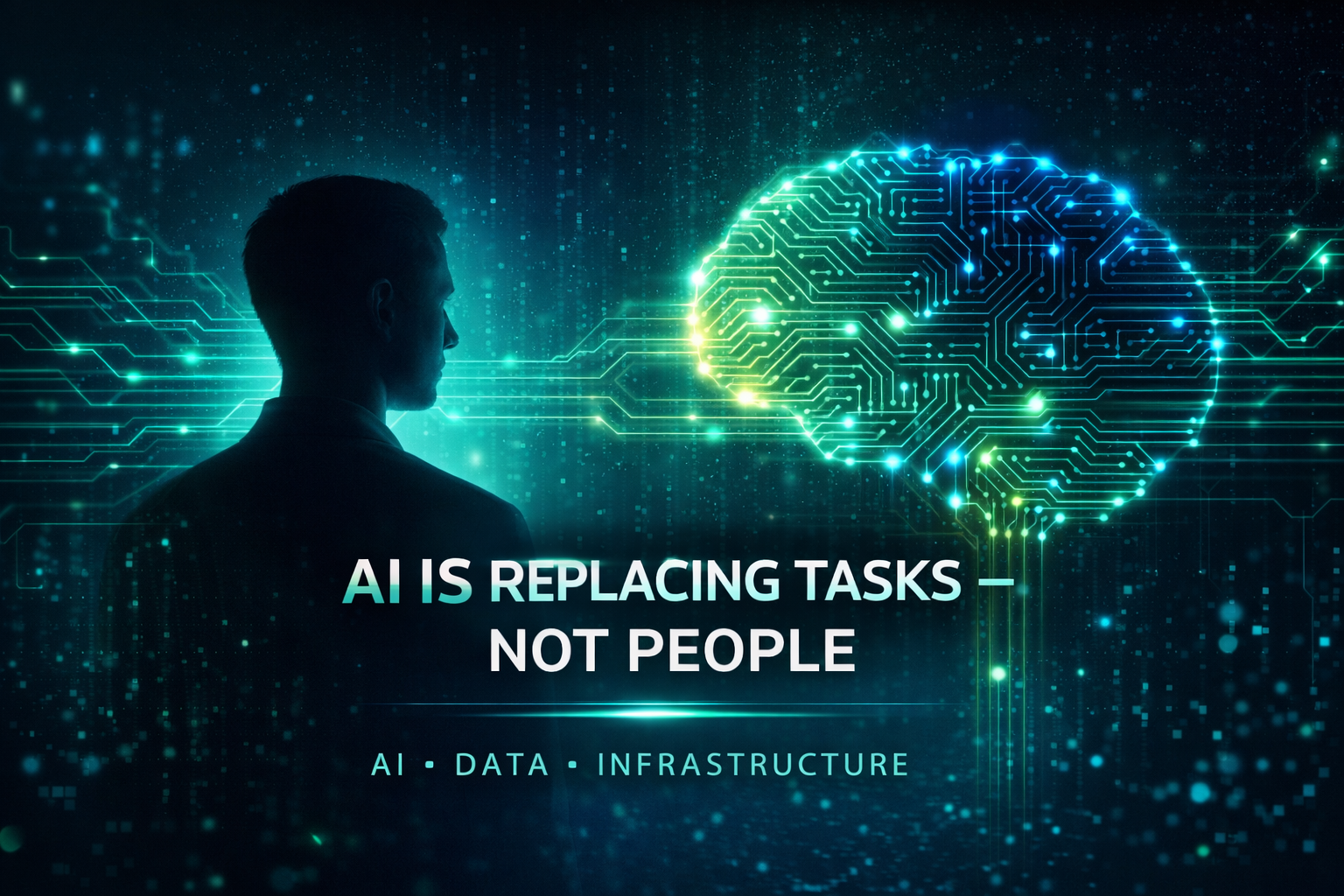
AI is not your competition.
It’s your tool.
The real shift happening right now is this:
👉 Tasks are being automated
👉 Systems are being upgraded
👉 Value is being redefined
⚙️ What This Means
Repetitive work is disappearing.
Speed is increasing.
Efficiency is becoming the standard.
But human value is not gone —
It is evolving.
🧠 The New Advantage
The people who win now are not those who work harder…
They are those who:
✔ Use AI to move faster
✔ Use systems to scale output
✔ Focus on thinking, creating, and decision-making
🚀 The Real Question
AI is already here.
The only question is:
👉 Are you using it to grow…
👉 Or ignoring it and falling behind?
💡 Final Insight
AI doesn’t replace people.
It replaces how things are done.
If you adapt — you grow.
If you resist — you struggle.
🔥
Stay ahead. Stay informed.
Are you sure?
Do you really want to delete this post? This action cannot be undone, and any revenue associated with it will be permanently lost.
@Lecmos • 4 months ago • African
Revenue Overview
Today's Revenue
0.0000 GUV
Lifetime Revenue
0.0000 GUV
Lifetime Breakdown
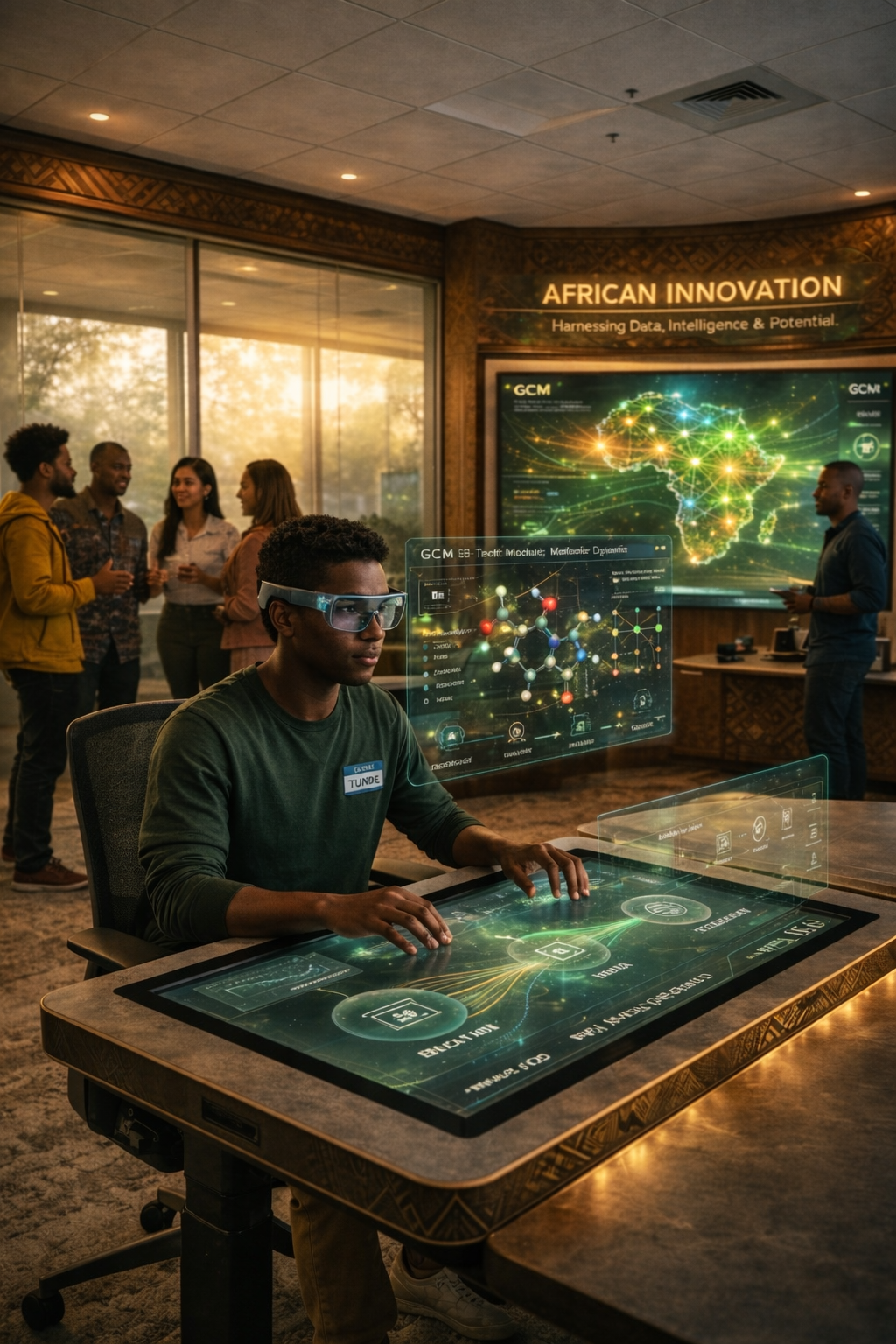
A new generation of thinkers harnesses data, intelligence, and technology to shape the future—transforming classrooms into living systems where ideas connect, evolve, and create real-world impact.
Are you sure?
Do you really want to delete this post? This action cannot be undone, and any revenue associated with it will be permanently lost.
Identity & Brand
-
Public IdentityLECMOS
-
Username@Lecmos
Connect & Contact
Let's build meaningful impact together
Support Creator
Love what LECMOS is doing? Send a tip to show your appreciation and help them continue creating great content!
Build Your Identity. Build Your Brand. Build Your Future.
On GoforusNet, anyone can build personal brands, company brands and register businesses�no website or app required.
Personal Brand
Build your reputation and visibility
Company Brand
Create and grow your organization identity
Register Business
Legitimize and grow your enterprise
Digital Entrepreneur
Start your digital economy journey today
Tip LECMOS
Full Bio
LECMOS
Explorer